Bathroom demolition is messy, loud, and takes more time than most people expect, especially without professional light demolition services.
If there’s drywall, tile, or an old cast-iron tub involved, you’ll likely need proper construction debris removal afterward. The bathroom demo phase might feel like you’re just tearing things out, but if it’s not done right, the rest of the remodel can get off to a shaky start.
Although not as glamorous as tile installation or vanity upgrades, demo is the foundation—and it has to be solid. This guide breaks down every part of the demolition process into manageable steps. From the first shutoff valve to the last contractor bag of tile, every phase is covered.
If it all starts to feel like a lot—that’s because it is. But it can still be done in just a few days if there’s a plan.

Stock Up on This Stuff Before You Start
Before the bathroom demolition begins, suit up:
- Goggles
- Hard hat
- Face mask
- Work gloves
- Knee pads
- Safety boots
Also, get your tools ready. Here’s a list of what you’ll need to make demo work smoother:
- Utility Knife
- Reciprocating Saw
- Crowbar
- Mallet
- Screwdriver
- Wrench
- Buckets
- Contractor Trash Bags
- Trash Can
- Shop Vac
- Broom
- Rags
- Ladder
Step 1: Shut Off Utilities
Before anything gets pulled off a wall or unscrewed, shut off both water and power to the bathroom.
Shut Off the Water Supply
Look for shut-off valves under the sink and behind the toilet. Turn them off and test by opening the faucet to ensure the water stops flowing. If the fixtures don’t have local shutoffs, you may need to close the main water line for the house.
Once the water supply is off, flush the toilet to empty the tank. Run all fixtures dry. If you’re removing a tub or shower, you may also need to disconnect supply lines from a central location.
Cut the Electrical Supply
At your main circuit panel, identify and turn off the breaker serving the bathroom. Don’t rely on switches alone—make sure no power is running behind the walls. Use a voltage tester before working around wires or removing fixtures.
Step 2: Protect Surrounding Areas
Bathroom renovations kick up a lot of dust, especially during demo. To keep it from spreading through the rest of the house, the ceiling vent needs attention. Sealing it with painter’s tape and plastic wrap stops dust from getting pulled into the HVAC system and sent elsewhere. It takes just a few minutes to cover properly, but the payoff is worth it.
Overall, remember to:
- Tape plastic wrap across vents, doorways, or any opening leading into a hallway.
- Use drop cloths on adjacent flooring.
- Remove baseboards and trim carefully using a mallet and pry bar. Keep them intact if you plan to reuse them.
- If you’re in an upstairs bathroom, protect the staircase and hallways leading out of the room from demolition traffic.
Step 3: Remove Fixtures and Cabinets
Start with what you can see and touch before tackling what’s behind walls and under floors. This reduces risk and opens space to move more freely.
Toilet
Use a wrench to disconnect the water line. Remove the cap bolts and gently rock the toilet to loosen the wax ring seal. Lift it straight up and place it in a trash can or bucket to haul away. Plug the drain opening with a rag to prevent sewer gas from entering the room.
Vanity, Sink, and Faucet
Remove any drawers or doors from the vanity to reduce weight. Use your screwdriver to unfasten it from the wall, and a wrench to disconnect plumbing under the sink. If the countertop is caulked to the wall, score along the joint with a utility knife first.
Bathtub or Shower
A tub or shower is the largest item in most bathrooms and takes the most time to demo. If tile surrounds the tub, start by removing those first. Use a reciprocating saw to cut fiberglass or steel tubs into smaller pieces. Use buckets to carry out smaller debris. Be ready—tubs are heavy and hard to maneuver.
Cabinets and Medicine Cabinets
Unscrew and lift cabinets straight from the wall. If a mirror is attached with glue or hardware, use painter’s tape in an “X” pattern across the surface. Work a flat bar behind it and remove slowly.
Step 4: Removing Bathroom Tile Without Breaking Everything Else
Tile removal is one of the most demanding parts of any bathroom demo. It’s also where injuries happen most often. The shards are sharp and unpredictable, and the noise is almost constant. Work gloves, goggles, a face mask, and knee pads aren’t optional—they’re required.
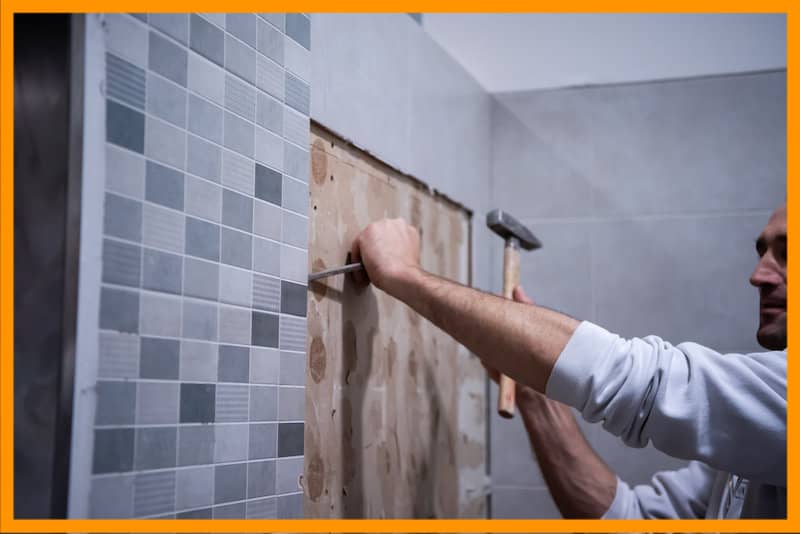
Start with wall tile. Use a utility knife to slice through the caulk lines. Tap the edge of the tile with a hammer and chisel to loosen the first piece. Once the wall behind the tile is exposed, work your way across the surface from top to bottom. Grout dust travels easily, so tape shut any connecting doors or vents.
Floor tile behaves differently. Begin in a corner or near a heating vent where a tile edge comes up easily. Once one tile is removed, leverage increases. Chipping out floor tiles with a pry bar and hammer takes time. Cement board or mortar underneath may need to be pried up if it’s stuck directly to the subfloor. Vinyl and linoleum flooring can be scored and lifted in strips.
Expect a lot of weight. Tile adds up quickly, especially with backer board or thinset still attached.
Step 5: Gut. The. Walls.
With the tile gone, the walls behind them usually need to follow. Gypsum drywall rarely survives demo in reusable shape. Cement backer board can stay, but only if it’s in great condition and stays securely in place—which is rare.
Score the walls with a utility knife near the ceiling, corners, and floor. Then cut drywall sections with a reciprocating saw to avoid pulling huge, uneven chunks that damage surrounding framing.
Keep a lookout under the walls. Pipes, junction boxes, and electrical wiring are not always installed where expected. Remove the surface layer first, inspect what’s behind it, then plan the next cuts.
The same logic applies to the flooring. Pulling up old plywood subflooring should be done only if there’s water damage or rot. Otherwise, cleaning and refurbishing the surface is enough prep for the next build phase.
Step 6: Don’t Wait to Clean Up
Every hour of tear-out should come with at least fifteen minutes of cleanup. A scattered worksite slows progress and damages tools. Bags of tile get heavy fast—don’t wait until they’re packed full before hauling one out.
Use the contractor trash bags regularly. Fill a few, get them outside or hauled down, and come back for more. Buckets help with sharps and irregular debris.
Keep a broom and vacuum running throughout the process. Grout dust is brutal once it settles, and it doesn’t stop moving on its own.

When Hauling Trash Becomes Its Own Project
By day two, demo work may stop feeling like demolition—and start to feel like garbage management. That’s when the weight of everything becomes real. Every trip to the driveway or bin adds time, and if a truck or dumpster isn’t on hand, it turns into a logistical nightmare.
At that point, calling a junk removal company makes sense. Services like We Love Junk specialize in construction debris removal, from broken tubs to contractor bags full of tile and grout. In fact, they even do the demo themselves if the project sounds like too big a task to DIY (do it yourself). They take over the heavy lifting, prevent setbacks, and give the remodel crew a clean slate to start again.
Related Article: Dumpster Rental vs. Junk Removal
Frequently Asked Questions About Bathroom Demo
How do you demo a bathroom vanity without damaging the drywall?
Start by scoring the caulk line where the vanity meets the wall using a utility knife or razor blade. Don’t cut too deep—you only want to break the seal. Then locate and remove any screws from inside the cabinet, attaching it to the wall.
Once everything’s detached, the vanity should pull away cleanly. If plumbing runs through the back of the cabinet and the vanity isn’t being salvaged, you can cut around the pipes using a reciprocating saw.
What’s the best way to remove a cast-iron bathtub?
Cast iron tubs can weigh 300 pounds or more, so hauling one out in one piece is usually not practical—or safe. After disconnecting the water supply, cutting away caulk, and removing fasteners, use a sledgehammer to break the tub into smaller, more manageable chunks. Make sure to wear full safety gear—goggles, gloves, a face mask, and hearing protection. Remove broken sections with a crowbar or carry small pieces out in buckets.
How do you remove a shower door and frame before tile demo?
Start by removing the door itself. Depending on the style, that means unscrewing hinges, lifting sliding doors out of their track, or popping off clips holding it in place. Next, cut through any caulk around the frame using a utility knife. Unscrew each section of the frame—side rails, header bar, and base track—then lift it out carefully. With the door, frame, and any shelving or fixtures removed, the walls will be transparent for safe tile removal.
Why plug the toilet drain during demo?
Once the toilet is removed, plugging the open drain with a rag helps keep sewer gas from creeping into the house. It’s a small step, but it makes a big difference in keeping bathroom odors—and potentially harmful fumes—out of your air during the demolition process.

When the Dust Settles (Literally)
Bathroom demolition is one of those projects that always looks easier on paper. In reality, it’s loud, exhausting, and kind of relentless. It’s hours of hauling tile, popping nails, cutting drywall, and wondering how that much dust is still floating in the air.
But once the last bag of broken tile is gone and the final sweep of the shop vac is done, the space finally starts to feel like a blank slate. The hardest part is usually over. Whether it’s a full bathroom remodel or just a clean-out before upgrading fixtures, solid demo work clears the way.
If the process feels like it’s getting out of control—or the debris pile is starting to resemble a mountain—get help. Professional junk removal services like We Love Junk can haul away the mess or even handle the demolition itself. That way, the focus can stay on building the bathroom that comes next, rather than dragging the old one out in buckets.
Demo is doable. But no one said it had to be solo.